Choose interactions that make a task easier
Useful interactions help visitors compare, filter, calculate or complete a task. Define the benefit before deciding how the control should look. A hypothetical product filter can reduce a large catalogue to suitable options, while a guided brief can collect the details needed for a quotation. The interface should explain its inputs and results and remain understandable when an enhancement fails. Check keyboard use and clear feedback. Animation should not delay access to the answer. If an effect's only justification is that it looks modern, reconsider whether it belongs in the main journey or should be a restrained optional detail.
Choose features according to the work they perform
A feature should solve a defined customer or operating problem. Search helps when a catalogue is too large to browse comfortably; filters help when meaningful attributes narrow the choice; a booking tool helps when availability can be managed reliably. Do not add a feature solely because competitors have it. A hypothetical small service site may be clearer with a well-designed enquiry form than with a complex account area. Describe the expected input, result and failure cases before implementation. Include the staff workflow behind the screen, since a customer-facing feature can create manual work if its operational process has not been planned.
Design both completion and recovery
A form needs more than empty fields and a submit button. Explain what information is needed, mark required items and provide useful validation. Preserve entered values when an error occurs. The pending state should discourage accidental repeated submissions, and the success message should distinguish receipt from later acceptance or booking. A hypothetical quotation form can retain the selected product so the visitor does not have to type it again. Test missing information and an invalid address as well as a successful submission. Keep sensitive information out of general forms unless the workflow and handling have been properly designed for it.
Test a rough structure before final styling
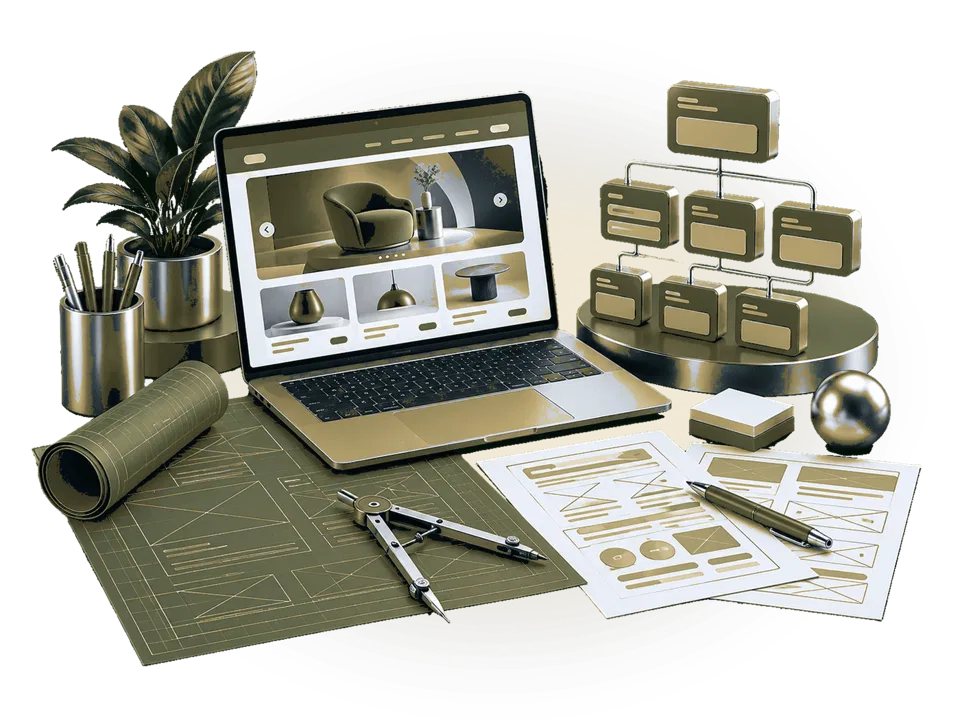
A prototype should help the team review the flow and information hierarchy before investing heavily in visual polish. It can be simple: a sequence of page sections, a clickable wireframe or one representative layout. Use realistic headings and actions so reviewers understand the intended journey. A hypothetical test might ask someone to find the right service and start an enquiry. Observe where they hesitate rather than guiding them through the interface. Revise the structure while changes are still inexpensive. A prototype is not evidence that the final implementation works; it is a way to resolve important design decisions before building the complete system.
Include accessible behaviour in ordinary design decisions
Readable contrast, descriptive links, meaningful headings and labelled controls help more people use a website. They should be considered while the layout is being designed, not added as a final decoration. Check keyboard access and visible focus for interactive elements. Keep important information available as text rather than only in an image or hover state. A hypothetical enquiry form should remain understandable after the user starts typing, so persistent labels matter. Accessibility review is a continuing practice, and a short visual check is not a complete compliance assessment. Document the issues found and verify repairs with the relevant interaction.
Discuss the work with SEO Agency Pretoria
For appointment-led teams, we connect service information to booking requirements, response expectations and realistic travel coverage. For business-to-business firms, we focus on procurement questions, service scope and the information a buyer needs before requesting a proposal.
Send the relevant requirements to info@seoagencypretoria.co.za. We will confirm scope, availability and the appropriate next step before work is agreed.
Sources and further reading
Related questions
Continue with interactive website design and modern web form design for the related decisions in your brief.