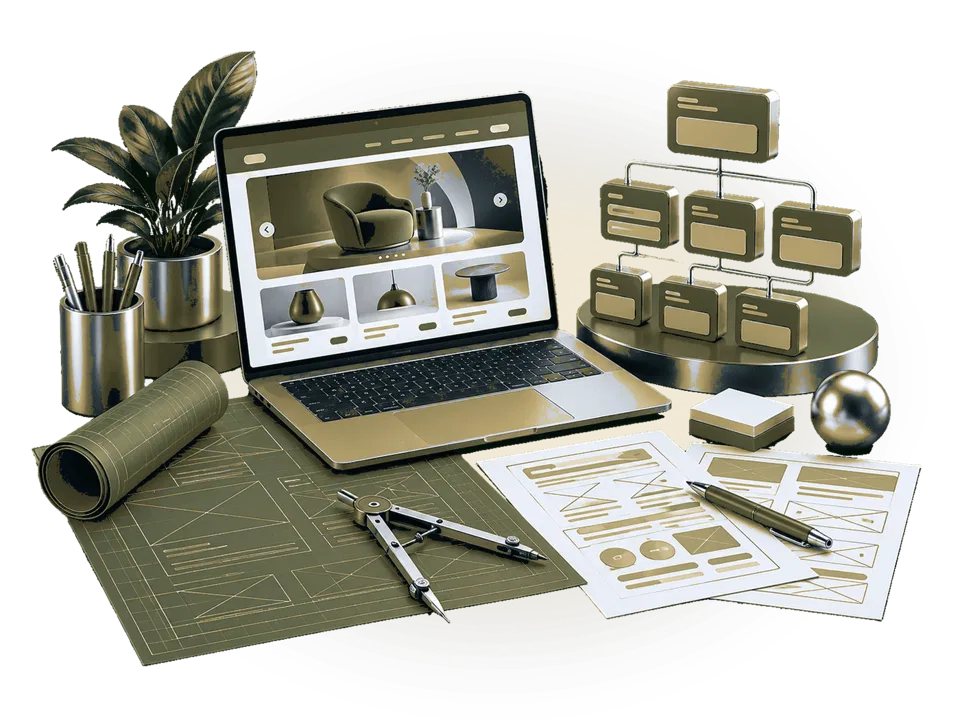
Understand design as a set of connected decisions
Website design covers the organisation and presentation of content and the interactions through which visitors use it. It includes information hierarchy, layout, typography, imagery, navigation and the behaviour of controls. Development turns those decisions into working software, although one person may perform both roles. A design is not complete when a static homepage looks attractive. The service pages, error states, forms and mobile layouts also need attention. A hypothetical business website succeeds when its presentation helps people understand the offer and complete the intended task. That purpose connects visual choices to practical requirements.
Start with a concrete visitor task
Before opening a design tool, write the main task the website should support. Examples include understanding a service, comparing a product or requesting a consultation. List the information a visitor needs to complete that task and the questions that could stop progress. Use this sequence to propose a page structure. A hypothetical supplier might need product categories, specification detail and a quote route, while a personal portfolio needs selected work and a contact method. This early distinction prevents a project from becoming a collection of attractive but disconnected sections. A clear task also gives later design reviews something more useful to discuss than personal colour preferences.
Prepare content before polishing layouts
Collect approved business facts, product or service information, images and contact details early. Draft the main message and supporting points before choosing a final composition. Real content exposes layout requirements that placeholder text hides, such as long titles or complex comparison details. A hypothetical service page may need a process explanation and a short brief form, not another decorative image panel. Keep ownership of factual review clear. Design can improve hierarchy and readability, but it cannot reliably fill gaps in the business information. A content inventory also reveals which existing URLs and useful material should be preserved during a rebuild.
Test a rough structure before final styling
A prototype should help the team review the flow and information hierarchy before investing heavily in visual polish. It can be simple: a sequence of page sections, a clickable wireframe or one representative layout. Use realistic headings and actions so reviewers understand the intended journey. A hypothetical test might ask someone to find the right service and start an enquiry. Observe where they hesitate rather than guiding them through the interface. Revise the structure while changes are still inexpensive. A prototype is not evidence that the final implementation works; it is a way to resolve important design decisions before building the complete system.
Use repeatable components without repeating every page
A design system can provide consistent buttons, cards, spacing and form controls while allowing pages to serve different purposes. Reuse the rules, not the entire composition and copy. A hypothetical service page may need a process explanation, while a guide needs a readable article layout. Both can share typography and navigation. This distinction makes the site coherent without making every destination feel interchangeable. Document the components using realistic content, including long labels and empty states. Later editors should be able to add a page that belongs to the brand without copying an unrelated page and forgetting to replace its details.
Discuss the work with SEO Agency Pretoria
For appointment-led teams, we connect service information to booking requirements, response expectations and realistic travel coverage. For business-to-business firms, we focus on procurement questions, service scope and the information a buyer needs before requesting a proposal.
Send the relevant requirements to info@seoagencypretoria.co.za. We will confirm scope, availability and the appropriate next step before work is agreed.
Related questions
Continue with web design and development and local web design for the related decisions in your brief.